
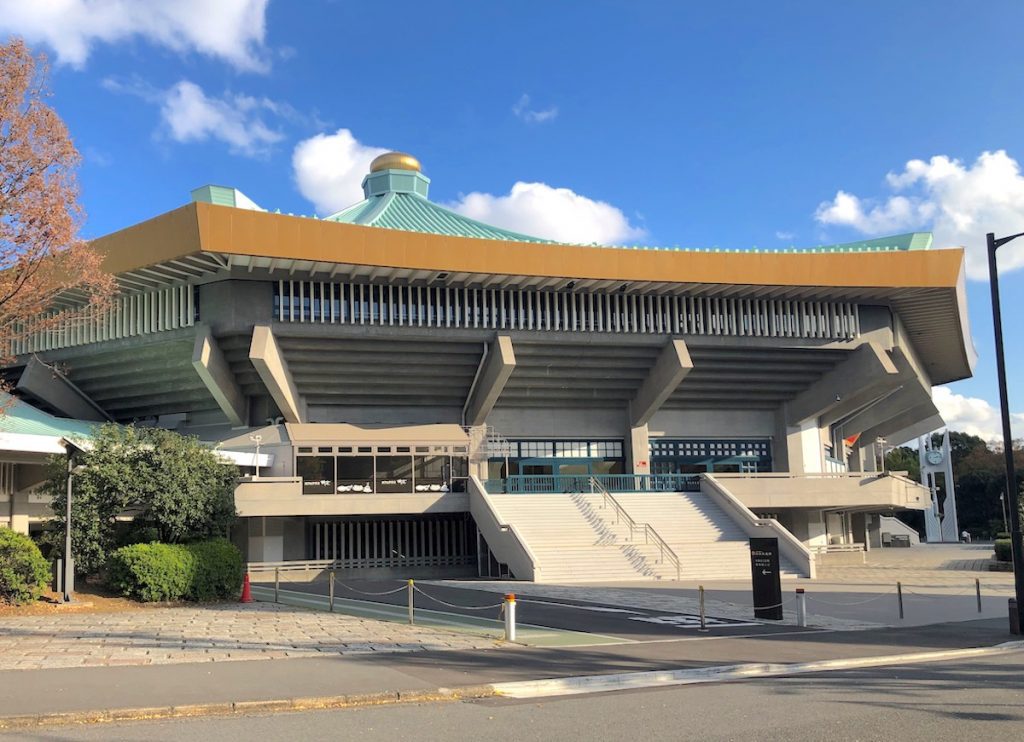
Nippon Budokan needs no introduction in the music world. Built for Olympic judo in 1964, it became globally synonymous with live music when The Beatles performed here in June 1966 — the first rock act to play the venue. Since then, an extraordinary range of artists have performed at the Budokan, from Bob Dylan and Deep Purple to Mariah Carey, BTS, and Utada Hikaru. For artists in Japan, “playing the Budokan” remains a cultural milestone. For international fans, it’s a bucket-list venue with a very specific and unusual seating layout that’s worth understanding before you attend.
Quick Facts
| Capacity (concerts) | ~14,000–15,000 |
| Exact capacity | 14,471 (arena: 2,946 / 1F stands: 3,199 / 2F stands: 7,846 / standing: 480) |
| Address | 2-3 Kitanomaru-koen, Chiyoda, Tokyo 102-8321 |
| Nearest station | Kudanshita (Tokyo Metro Tozai / Hanzomon / Toei Shinjuku) — 5 min walk |
| Opened | September 1964 |
| Shape | Octagonal |
| Official site | nipponbudokan.or.jp |
Capacity & Seating Breakdown
Understanding the Octagonal Layout
Budokan’s defining architectural feature — and its most challenging aspect for concert-goers — is its octagonal shape. Unlike rectangular arenas, the eight-sided layout means the stands wrap completely around the performance area. This creates three distinct zones:
- Arena (floor level) — The flat central floor, used for both standing and seated configurations. ~2,946 seats when configured for seating.
- 1st Floor Stands (Lower level) — Fixed seating on the lower tier surrounding the arena floor. ~3,199 seats arranged in 8 directional sections.
- 2nd Floor Stands (Upper level) — The upper tier, overlapping directly above the lower level. ~7,846 seats, also in 8 directional sections. A standing area behind row X is available in some sections.
The 8 Sections: Directions as Names
Budokan’s eight seating sections are named by compass direction: North, Northeast, East, Southeast, South, Southwest, West, and Northwest. For most concerts, the stage is positioned on the North side. This means:
| Section | Typical view (end stage, North) |
|---|---|
| South | Best — directly facing the stage from the far end |
| Southeast / Southwest | Good — angled front-facing view |
| East / West | Side view — stage visible but at an angle |
| Northwest / Northeast | Rear — looking at the back of the stage |
| North | Rarely sold — directly behind the stage |
North, Northwest, and Northeast sections are either blocked off or sold as discounted “rear stage” tickets. If you receive one of these seats, secondary screens are typically provided, but the experience is noticeably different from front-facing sections.
Row and Seat Numbering
Each section has rows labeled A through X (with I and O omitted). Row A is closest to the stage (or to the arena floor perimeter), Row X is the furthest back. Seat numbers in Row A typically run from 12–49; in Row X from 1–60. The upper level (2F) sits directly above the lower level — it doesn’t extend further back, but the elevation is greater.
A notable quirk: Row K on the lower level sits just behind a passage aisle with a low ceiling section directly overhead, partially obstructing the upper view from those seats. It’s considered one of the less desirable rows in the venue.
Stage Configurations
- End stage (North wall) — Most common. Stage built against the north wall with the audience on three sides (South, East, West) and some rear sections. Good sightlines from South and Southeast/Southwest; side views from East/West.
- Center stage / 360° — The stage placed in the middle of the arena floor, with the audience on all sides. More immersive but reduces the “best seat” advantage. Popular with idol groups and some rock acts.
- Arena floor seated — All floor seats face the stage; usually with a runway extending into the floor. Standing on the floor is less common at Budokan than at larger arenas.
Which Section Should You Choose?
- Best seats: South section, 1F or 2F, any row — directly facing the stage
- Good value: Southeast / Southwest sections — still front-facing at an angle, often slightly cheaper
- Avoid: Northwest / Northeast sections — partial or rear stage view
- Arena floor: Standing areas are close to the stage but can feel cramped; for Budokan’s size, distance from the stage is relatively short everywhere
One of Budokan’s genuine advantages: even the “worst” non-rear seats are relatively close to the stage given the venue’s 14,000-person capacity. The intimacy that comes with its size is part of what makes performing and attending here so memorable.
How to Get There
The nearest station is Kudanshita, a 5-minute walk through Kitanomaru Park. For a full step-by-step photo guide: Nippon Budokan Access Guide →
| Station | Line | Walk time |
|---|---|---|
| Kudanshita | Tokyo Metro Tozai / Hanzomon / Toei Shinjuku | ~5 min |
| Takebashi | Tokyo Metro Tozai | ~8 min |
Coin Lockers
Nippon Budokan itself does not have coin lockers inside the venue. The venue is situated in Kitanomaru Park — a park environment without the commercial infrastructure of larger venue complexes. Kudanshita Station has a limited number of coin lockers, but availability on event days is unreliable.
Practical advice: Store luggage at your hotel before heading to the Budokan, or use a luggage storage service near Kudanshita or at a larger nearby station (Iidabashi or Jimbocho, both accessible on the same metro lines). Do not rely on finding a coin locker at or near the venue on concert day.
| Location | Availability | Note |
|---|---|---|
| Kudanshita Station | Limited | Fill up quickly on event days |
| Iidabashi Station | Better | 5 min by Metro from Kudanshita |
| Inside venue | None | No coin lockers at Budokan itself |
On Concert Day
Recommended Arrival Times
- Merchandise: 2–3 hours before open time. Budokan concerts typically have merchandise tables set up outside or in the lobby. For major shows, queues form quickly.
- Entry only: 30–45 minutes before open time. Budokan’s bag check process is relatively quick, but the single access path through Kitanomaru Park creates crowds.
Bag Policy & Prohibited Items
Bag checks at Budokan are relatively light compared to larger venues — staff primarily look for professional cameras and recording equipment. Standard prohibited items apply: detachable-lens cameras, recording devices, selfie sticks. Bags are generally not formally searched but may be visually inspected. No strict size requirement is published, but common sense applies — there is limited space under seats in the older facility.
Food & Drink
Vending machines are located throughout the Budokan concourse. A small outdoor concession stand operates near the entrance for some events. The venue does not have the food court infrastructure of modern arenas. Eat before arriving — options within the Kitanomaru Park area are limited, though Kudanshita and Jimbocho have good dining options within a 10-minute walk.
Getting Home After the Show
Most Budokan concerts end between 9:00 PM and 10:30 PM. The last trains from Kudanshita run until approximately 11:45 PM. The walk back through Kitanomaru Park can feel crowded immediately after the show — the park path is single-lane and the crowd merges at the park gate. Give yourself 15–20 minutes after exit to reach the station comfortably.
Frequently Asked Questions
What is Nippon Budokan’s capacity?
The official capacity is 14,471, divided across arena floor seats (2,946), 1st floor stands (3,199), 2nd floor stands (7,846), and standing areas (480). In practice, concert capacity ranges from approximately 10,000 (smaller configurations) to around 14,000–15,000 for full-house events.
Why is Nippon Budokan considered a legendary music venue?
The Beatles performed here in 1966 — the first rock act to play the venue. The shows were highly controversial in Japan at the time (many considered rock music inappropriate for a martial arts hall), which only amplified their cultural significance. Since then, artists who “play the Budokan” are understood to have achieved a certain level of recognition in Japan. Numerous live albums have been recorded here, including iconic releases by artists like Bob Dylan, Deep Purple, and many Japanese acts.
Are there coin lockers at Nippon Budokan?
No. There are no coin lockers inside the Budokan, and Kudanshita Station has very limited locker capacity. Store luggage at your hotel or at Iidabashi Station before attending.
What are the best seats at Nippon Budokan?
For end-stage concerts (stage on the North side), South section seats on either the 1st or 2nd floor — directly facing the stage — offer the best views. Southeast and Southwest sections are also good. Northwest, Northeast, and North sections face the rear or side of the stage and are generally avoided unless they come at a significant discount.
Is Nippon Budokan indoors?
Yes, fully enclosed. The octagonal structure with its distinctive roofline has been continuously in use since 1964 and was used for judo and karate competitions at the 2020 Tokyo Olympics.